How to start bonsai with one tree
- Cost to start
- Check local nursery prices
- Difficulty
- Beginner
- First result
- First month
Budget for one tree and a watering can; reuse a tray
Needs frequent moisture checks
Observe the tree and establish its care routine
Match a first bonsai to your available light and climate, check its soil, and learn to water it before attempting pruning or wiring.
What you need to know
-
Match the tree to its location
Junipers and maples need outdoor seasons; a ficus can grow indoors beside a bright, unobstructed window, away from radiators.
-
Buy an identified plant
Choose a healthy nursery tree or pre-bonsai with a species label; ask where it grew and when it was repotted.
-
Prepare for drainage
Use a pot with open drainage holes, a watering can with a fine rose, and a tray for an indoor tree.
Check the soil, then water
Read the care page for your species before settling the tree into its position. Outdoor pots may need protection from frost, strong wind, or intense sun; ask a local grower what that means in your climate.
Check moisture daily at first, and more often during hot, windy weather. Feel about a centimeter below the soil surface. If it is still wet, leave it and check again later. As it becomes slightly dry, water according to the species guidance. Avoid letting the root ball dry out completely.
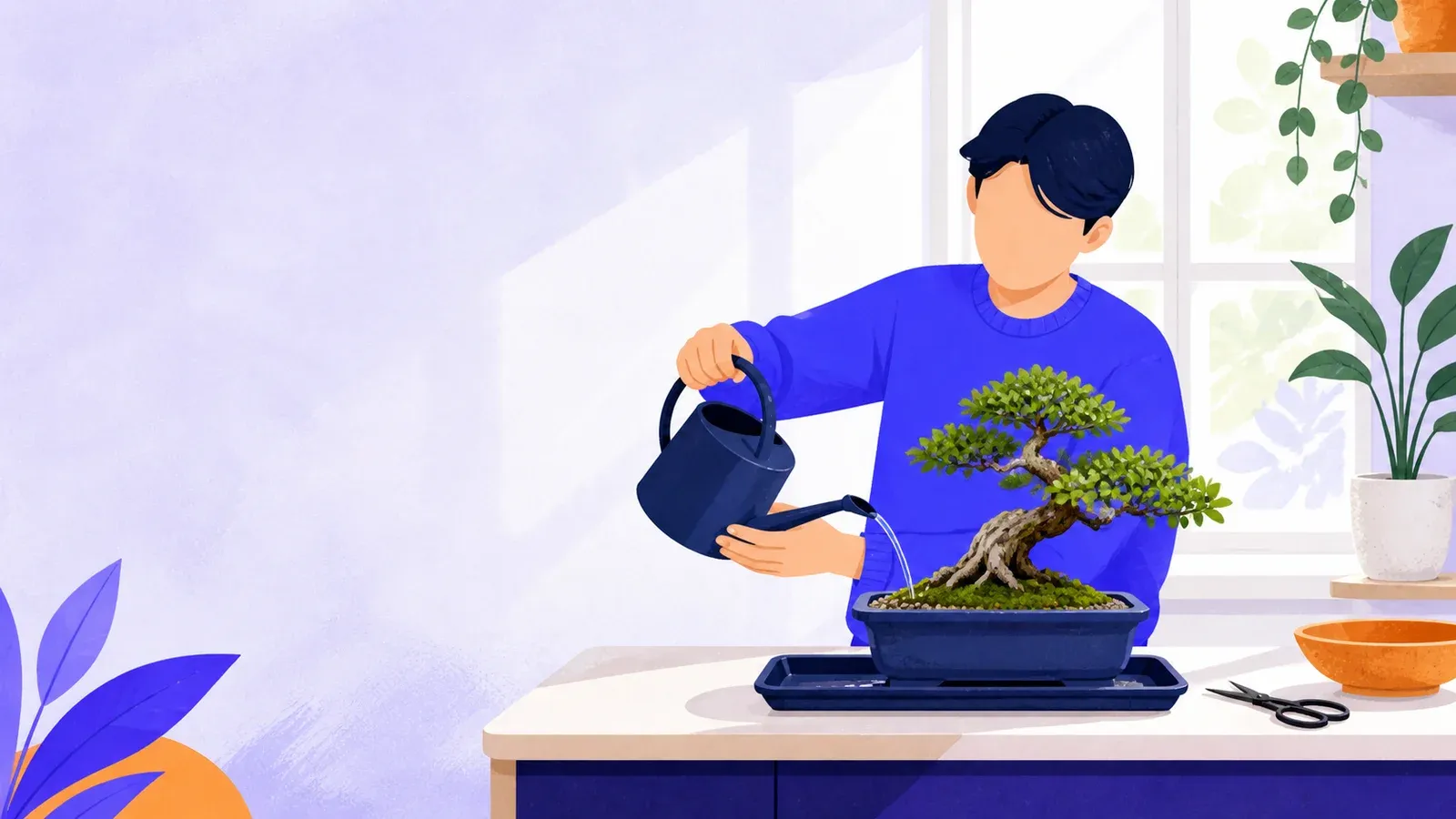
Apply water gently over the whole surface until it runs from the drainage holes. Pause and repeat so the root mass is wetted throughout. Let the pot drain and empty the tray. The Bonsai Empire watering guide shows the process.
Observe before styling
During the first weeks, note moisture, watering, and changes in foliage. Inspect for pests and blocked drainage. Yellowing leaves have several possible causes; check the soil and location before adding water. Take photos and ask the nursery or a bonsai club if the decline continues.
Leave major pruning, wiring, and repotting until you understand the species and suitable season. For feeding, follow its care guide and the fertilizer label. A stressed tree needs its growing conditions checked before decorative work.

Reference guides
- RHS bonsai guideHorticultural guidance on position, watering, feeding, and seasonal care.
- Bonsai Empire basicsFind species care pages and detailed pruning, wiring, and repotting instruction for later.
- American Bonsai SocietyFind United States clubs and learning resources for advice suited to your local conditions.

Apps for your phone
-
PlantNet
Use photo identification to suggest a species, then confirm it with the nursery before choosing care instructions.
 App Store
 Google Play