How to start tennis with a cooperative mini-court rally
- Cost to start
- ~$10-35
- Difficulty
- Beginner
- First result
- 60 minutes
Court time and one tube of slower balls
Control from close range before power
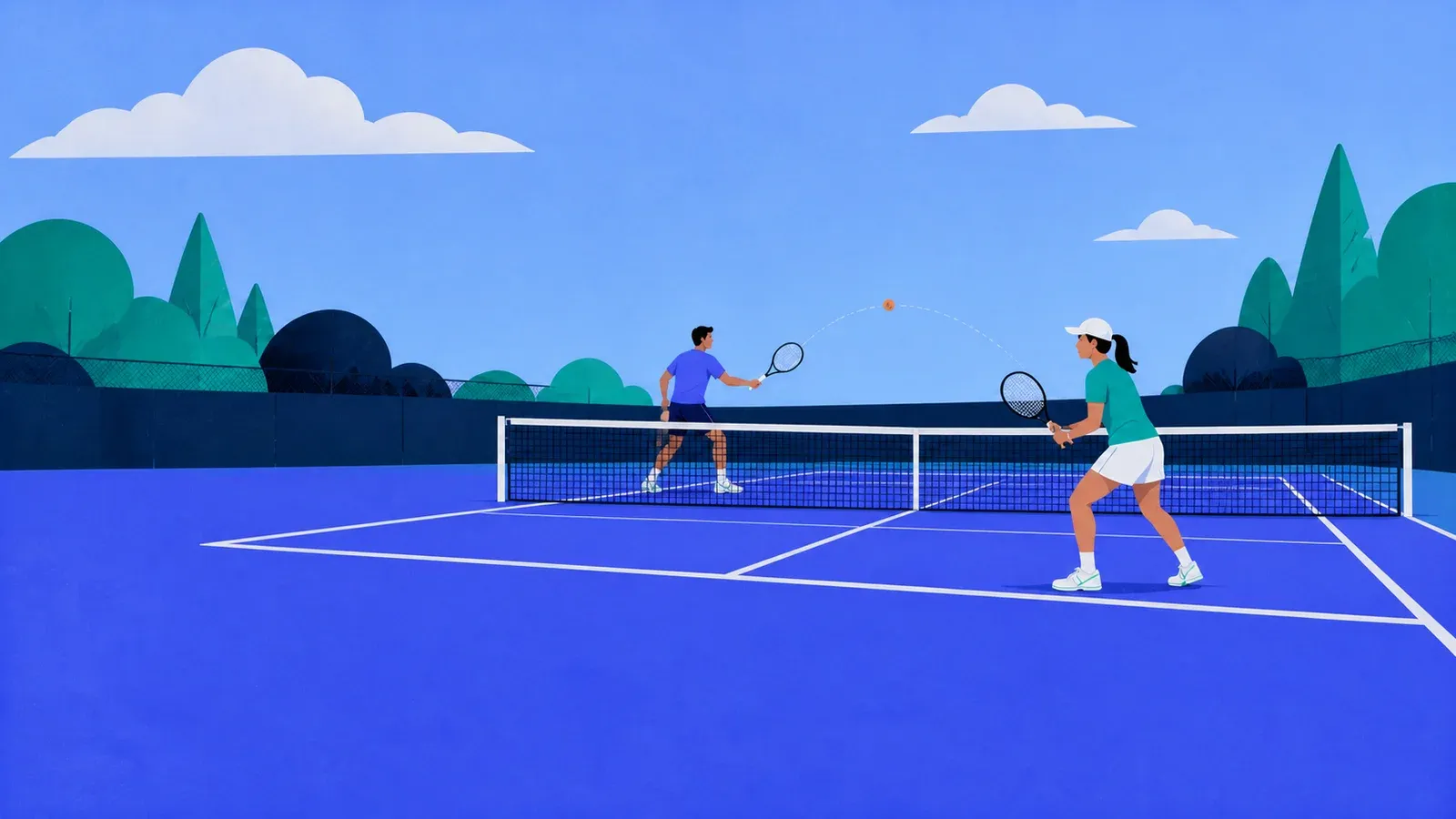
One cooperative mini-court rally
Borrow a suitable racket, use a slower ball, learn a relaxed forehand and ready position, then serve, rally, and score on a smaller court in one session.
What you need to know
-
Borrow a comfortable adult racket
Use a sound racket you can swing without strain. A standard loaner is enough; expensive frames and fresh custom strings will not create first-day control.
-
Start with a slower ball
A red or orange low-compression ball travels and rebounds more slowly than a standard yellow ball, giving both beginners more time to move and respond.
-
Work around the service line
Begin on a small court with both players near the service lines. Close range rewards a compact swing and makes a cooperative rally achievable.
-
Aim high and through the middle
Send a gentle, arcing ball well above the net toward a large central target. Count controlled crossings instead of trying to hit past your partner.
-
Keep the court and body safe
Use a dry, clear court, court-safe shoes and ample spacing. Warm up gradually, stop for sharp pain or dizziness and never swing when someone is within reach.
Reserve a court and borrow equipment
Find a legally available court with a sound net, dry surface and clear runoff on every side. Reserve an off-peak hour if possible so you can work slowly without people waiting. Check the venue’s rules for footwear, booking, lighting and outside coaching.
Warm up safely
Walk briskly around your half of the court, then add gentle side steps, forward steps and controlled changes of direction. Circle the shoulders, bend and extend the elbows without forcing them, and make small trunk turns.
Build a partner mini-rally
Take opposite sides of the net, roughly around the service lines. Shorten that distance if the ball rarely clears the net; move back only when exchanges become calm.
Find a beginner program and repeat
Cool down by walking, collect every ball and note one useful cue, perhaps “contact in front,” “finish balanced,” or “aim higher.” Repeat the same self-rally and mini-court sequence next time.

Build control with a slower ball
- ITF Tennis Play and StayExplains the serve-rally-score approach and how slower balls and smaller courts help starter players take part from their first lesson.
- USTA beginner forehand drillDemonstrates a self-rally progression with a red-dot ball, including a bounce, upward tap, catch, foot movement and shoulder turn.
Check the rules and find guided play
- 2026 ITF Rules of TennisProvides the current official rules and approved alternative scoring methods when you are ready to move beyond the informal first session.
- USTA program finderLocates local tennis programs, camps, tournaments and leagues in the United States; elsewhere, use your national association or local club.