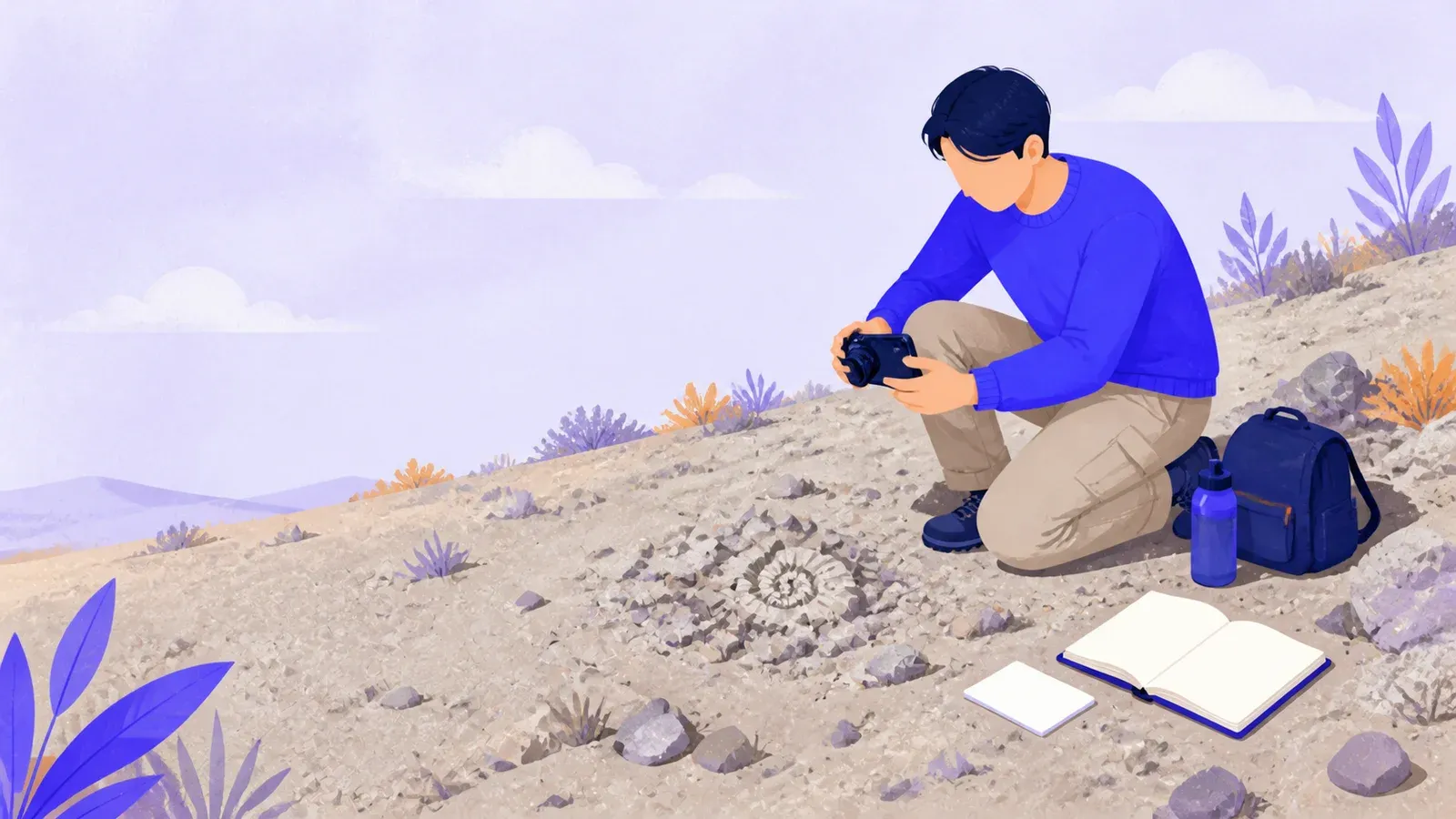
How to start fossil hunting with a legal surface search
- Cost to start
- ~$0-35
- Difficulty
- Beginner
- First result
- 60-90 minutes
Sturdy footwear, water and packing paper
Rules and context matter most
A complete site log; a find is optional
Plan a lawful beginner site, scan loose rock without digging, document geological context, and know when a possible fossil should stay exactly where it is.
What you need to know
-
Confirm the exact land manager and rules
Physical access does not grant collecting rights. Check current boundaries, hours, permission, allowed finds, quantity limits and tool rules.
-
Make the first trip surface-only
Leave hammer and chisel at home. Search loose material only where written rules permit it; never dig into a cliff, bank or protected outcrop.
-
Plan an exit before looking down
Check weather, official tide times, terrain and closures. Stay well away from cliff bases and edges, and tell someone your route and return time.
-
Record context before moving anything
Photograph the find in place with scale, then note its coordinates, date, rock type, land unit and whether it was loose or embedded.
-
Leave and report uncertain important finds
Do not move possible vertebrate fossils, tracks, human remains, artifacts or an unusual specimen. Protect the location and contact the land manager.
Choose a place where looking is allowed
Start with a managed fossil park, museum-led walk, public beach with a current collecting code or commercial site with clear visitor rules. A local guide can show which fossils are ordinary and which discoveries must be reported.
Complete a 60-minute search pattern
On arrival, read every sign. Cancel if access is closed, weather has worsened, water is rising, rock is falling or the route feels unsafe. A long journey does not make a warning negotiable.
Document before touching or moving
Give a possible find a field number such as FH001. Before lifting it, photograph its position and nearby rock, then take close views with a scale. Never lick a specimen to test for bone; it is unreliable and unhygienic.
Preserve the record and choose a next outing
At home, photograph an allowed specimen again beside its field label before doing anything to its surface. Begin with no cleaning.

Check access, rules and field safety
- BLM fossil collecting rulesCurrent U.S. rules for casual collection on BLM-managed land, including eligible fossils, personal-use limits and prohibited finds.
- National Park Service permit guidanceExplains why recreational collection of fossils and other geological specimens is generally prohibited throughout U.S. national parks.
- Natural History Museum beach guideBeginner equipment, access and permission checks, plus practical warnings about cliffs, rising tides, slippery rock and field tools.
Document and identify a find
- Natural History Museum discovery guideA museum workflow for context notes, scale photographs, coordinates, geological maps, preliminary research and identification requests.
- Rockd geological field mapExplore mapped rock units, time intervals and nearby fossil records, and save private field observations without treating the map as a permit.

Apps for your phone
-
Rockd
Preview mapped geology and log a private field observation; verify its suggestions with local sources and never use the map as proof of access.
 App Store
 Google Play