How to start drama by devising a two-minute scene
- Cost to start
- Free
- Difficulty
- Beginner
- First result
- 60–90 minutes
A clear room, chairs, paper, and timer you already have
Shared planning and simple performance; memorization is optional
One original two-minute scene rehearsed in two versions
Gather a small group, turn one shared prompt into a safe two-minute scene, rehearse it twice, and learn how ensemble theatre is made together.
What you need to know
-
Invite three or four willing participants
A tiny ensemble gives everyone something to contribute without creating a complicated schedule. One person can watch and direct while the others perform, then rotate.
-
Agree on boundaries before improvising
Keep the material fictional, avoid physical contact unless explicitly agreed, and let anyone pause or reject an idea without having to defend the decision.
-
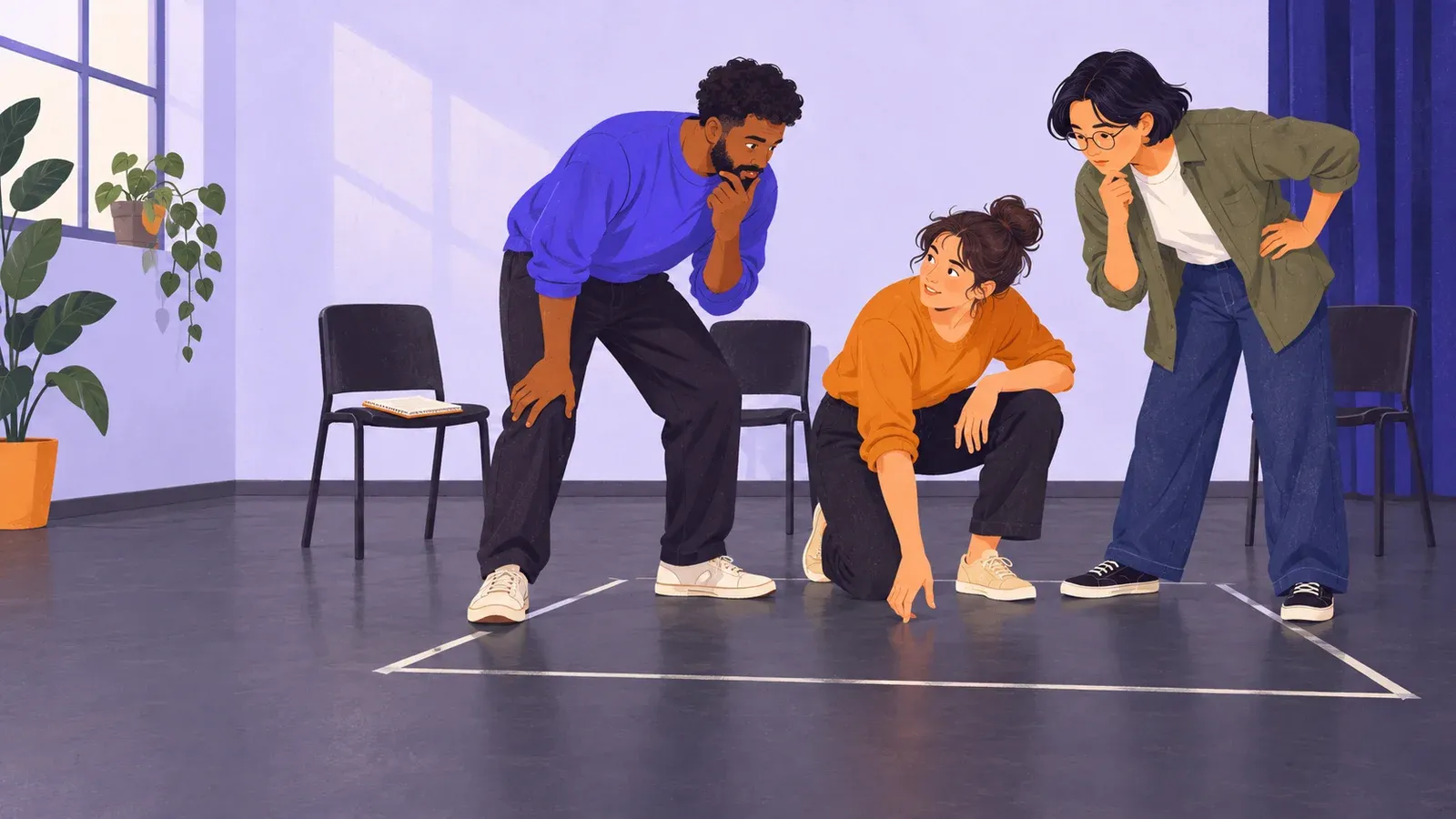
Build from a frozen picture
A tableau makes relationships visible before anyone has to invent dialogue. Change distance, height, gaze, and gesture to show who wants what.
-
Give the scene a clear change
Begin with one stable situation and end after a discovery or decision. Two minutes is enough when the audience can say what changed.
Form a small, reliable group
Invite people who are willing to participate rather than people you hope to persuade once they arrive. Set a start and finish time, explain the fictional prompt, and say that the session includes simple movement and improvisation.
Create a story as a frozen picture
Use this prompt. Three people are preparing a community room for an event and discover that a key object is missing. Decide whether it is a cake, donation box, photograph, envelope, or something else.
Connect the beginning and end
Start in the first tableau, breathe, then let the characters move and speak. Do not plan every line. Each person should try to achieve their stated aim: search, conceal, or keep preparations moving.
Find a place in local theatre
Repeat the exercise with a different ordinary prompt or swap the outside eye. If you want more structure, look for adult drama workshops, improv foundations, play-reading groups, or community theatre.

Ensemble and devised-theatre exercises
- National Theatre drama exercisesA production background pack containing focus, shared-tempo, and devising exercises that connect group practice with making an original piece of theatre.
- Drama Resource video collectionSelect one ensemble, devising or directing exercise from this specialist library and adapt it for participants' access needs.

Life inside amateur theatre
- Amateur of Life and Death podcastCrescent Theatre's active behind-the-scenes series introduces stage and backstage contributors, showing that amateur theatre involves far more roles than acting.
- r/Theatre discussion on getting startedUse this community thread to frame questions about local groups, volunteering, auditions and schedule commitments, then verify each opportunity.