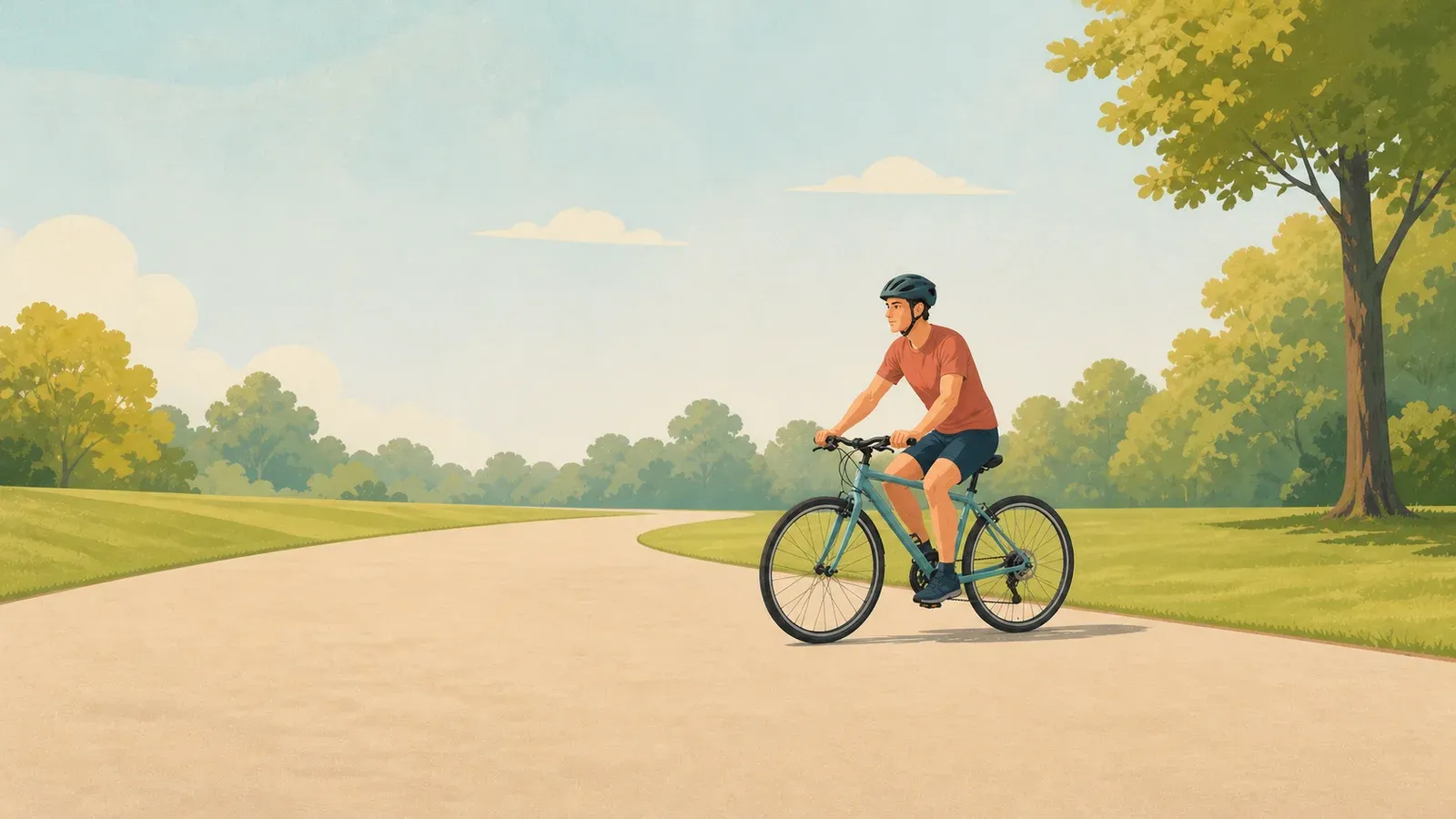
How to start cycling with a calm 20-minute practice loop
- Cost to start
- ~$0-50
- Difficulty
- Beginner
- First result
- 30-45 minutes
Borrowed bike, helmet and basic repair
Control before distance or traffic
One calm 20-minute practice loop
Fit and inspect a borrowed or existing bike, rehearse braking and signaling away from traffic, then ride a short familiar loop with a simple safety plan.
What you need to know
-
Use a bike that fits and fully works
You must be able to stand over, steer, pedal and stop the bike comfortably. Do not practice around a weak brake, loose wheel or damaged frame.
-
Fit an undamaged certified helmet
Wear it level and low on the forehead, with side straps around the ears and a snug buckle. Replace a helmet after a significant impact.
-
Complete an ABC Quick Check
Check air, brakes, chain and cranks, wheel retention and a brief test ride. Ask a mechanic when anything is loose, worn, cracked or unfamiliar.
-
Learn controls in a traffic-free space
Rehearse starts, progressive braking, straight lines, turns, shoulder checks and signals away from moving vehicles before attempting a route.
-
Be predictable under local rules
Laws, required equipment, signals and path access vary by location. Learn them locally, communicate clearly and choose the lowest-stress route.
Choose a fitting bike and low-stress route
Use a conventional bike whose size and controls you can manage. Standing over the frame should not trap or painfully press you, and you should be able to reach the handlebar and both brake levers without stretching.
Fit the helmet and complete an ABC check
Use a cycling helmet certified under your local standard. It should fit, show no cracks, crushed foam or damaged straps and have no known significant impact.
Drill braking and turning off-road
Lower the saddle temporarily with knowledgeable help if putting a foot down is essential to learning balance, then restore a sound pedaling position later. Mount with one foot on the ground and the other pedal raised forward.
Plan the next rides
After the loop, note three facts: where braking felt smooth, where you tensed and which route feature caused uncertainty. Recheck the tires and look for anything that loosened or rubbed.

Prepare the bike and rider
- NHTSA bicycle safetyCovers bike fit, working brakes, helmet use, visibility, route choice, defensive attention and predictable riding in a US road context.
- League basic bike checkIntroduces the ABC Quick Check for tires, brakes, chain and cranks, wheel retention and a slow test before riding farther.
Practice and build the next rides
- NHTSA learn-to-bike guideEncourages helmet fitting, a working bike and early practice in a controlled area free of cars before entering shared roads.
- League beginner riding adviceSuggests learning skills, pacing by time, riding with others and using comfortable parks, trails or low-stress routes to build gradually.