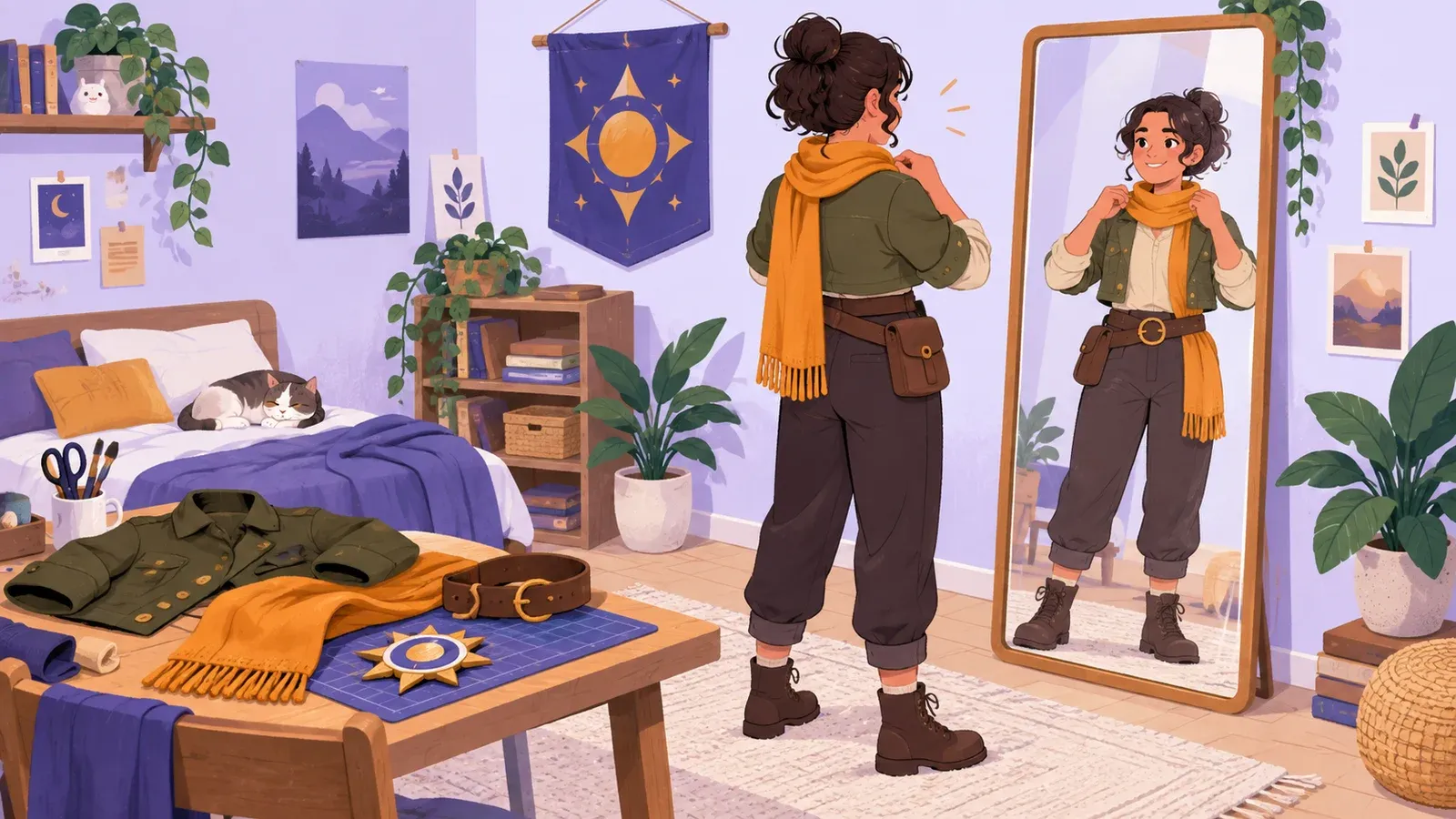
How to start cosplaying with clothes you already own
- Cost to start
- ~$0–40
- Difficulty
- Beginner
- First result
- One weekend
Closet clothes plus optional thrifted pieces and one simple accessory
Planning and fit checks; sewing and wigs are optional
A wearable costume and three private test photographs
Build a comfortable closet cosplay in one weekend, test it at home, take a few character photos, and prepare sensibly for a first convention.
What you need to know
-
Choose a character with ordinary clothes
A recognizable color palette, silhouette, or accessory is enough for a first interpretation. Avoid a design that requires armor, a complex wig, and unfamiliar sewing at once.
-
Make a reference sheet before shopping
Collect a few legitimate images showing the front, back, colors, and key details. List what you own, what you can adapt, and what can be omitted.
-
Comfort outranks screen accuracy
You must be able to see, breathe, sit, walk, use a restroom, and regulate your temperature. Test every layer and shoe before wearing the costume in public.
-
Add one handmade focal detail
A fabric patch, foam badge, painted notebook cover, or simple accessory gives you a contained craft problem and makes an everyday outfit feel intentional.
Choose a version you can finish
Pick a character you enjoy rather than one that seems popular. Look through their different outfits; an everyday, school, travel, or alternate design may be simpler than the iconic armored version.
Build from the wardrobe outward
Lay out the closest clothes you own. Match silhouette and color family before tiny decoration: a cropped jacket communicates differently from a long coat, while the exact button shape is unlikely to matter in a first photo.
Test the costume as clothing
Wear the full outfit at home for 30 minutes. Walk through doorways, sit in several chairs, raise your arms, bend to tie a shoe, and use the restroom. Check that closures stay shut and accessories do not catch on furniture.
Add one skill to the next version
Write down what stayed comfortable, what read clearly in photos, and what failed. Repair the weak attachment, adjust one garment, or remake the badge more neatly. That is a meaningful second session.

Plan, build, and wear a costume
- Punished Props Academy video libraryFilter this established prop and costume tutorial library for the one technique your first-weekend project needs.
- Essential tools and tips for new cosplayersThis Cosplay Alliance episode covers a small beginner tool kit; check each tool's safety instructions separately.
- Comic-Con 2026 cosplay guideThis current example shows why you must read the costume and prop policy for the convention you will attend.
