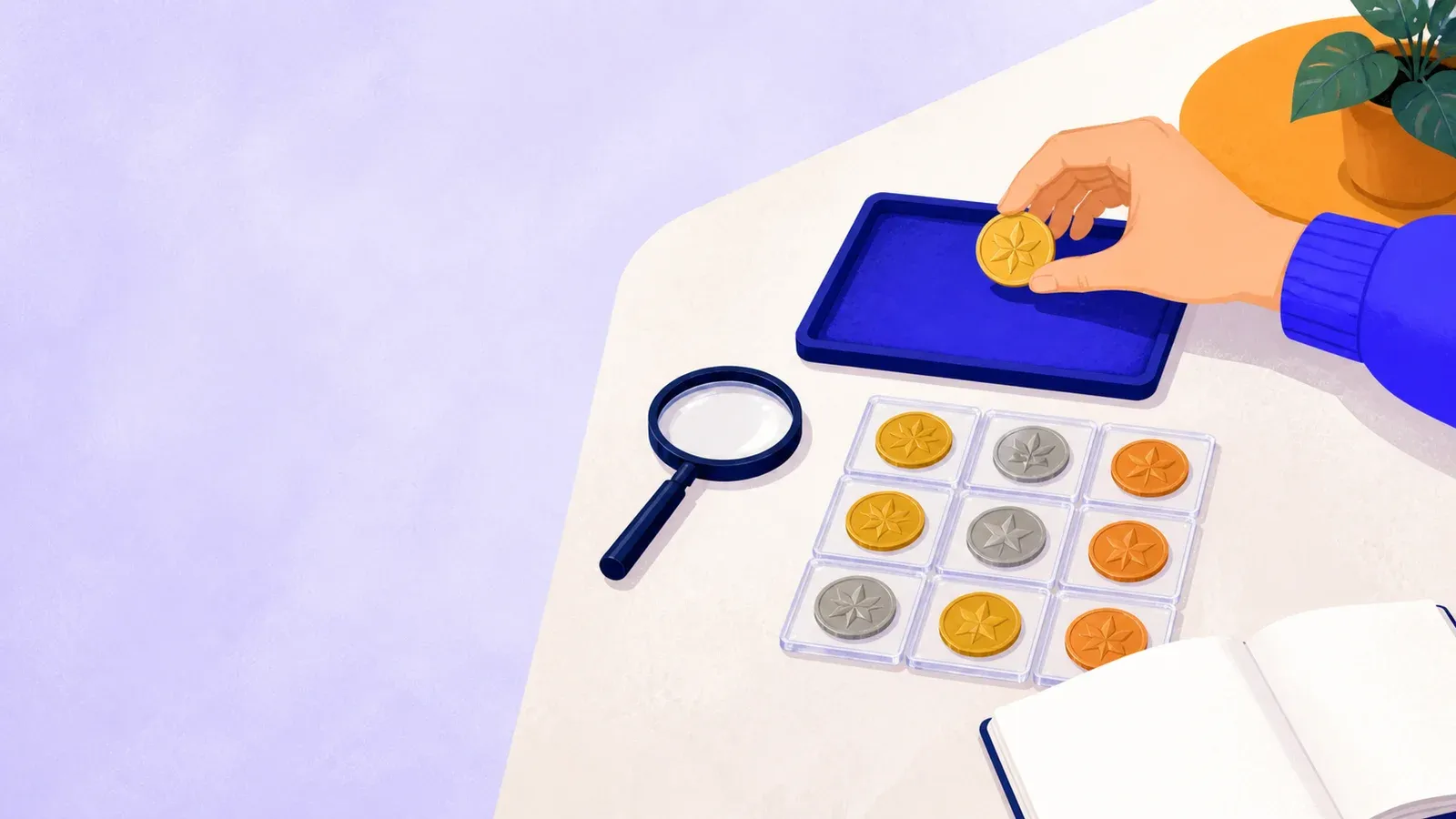
How to start coin collecting with a ten-coin inventory
- Cost to start
- ~$0-20
- Difficulty
- Beginner
- First result
- 60-90 minutes
Coins on hand, notebook and inert flips
Record evidence before researching
Ten identified, photographed entries
Learn coin anatomy, document ten coins you already own, protect their surfaces, and research identity and value without cleaning or buying impulsively.
What you need to know
-
Begin with coins you already own
Ten ordinary coins from change, travel or a family jar provide enough variety to learn without making a purchase or risking a scarce piece.
-
Hold every coin by its rim
Work above a clean, soft surface with dry hands. Keep fingers, food, drinks, adhesives and metal tools away from the obverse and reverse.
-
Record what the coin actually shows
Transcribe its words, date, denomination and marks; describe both faces and the edge before choosing an identification from a reference.
-
Never clean or polish a collectible coin
Rubbing and chemicals alter surfaces permanently. Preserve dirt, toning and grouping until a qualified specialist advises otherwise.
-
Separate identity, grade and price
A catalog match does not prove authenticity, a grade is an opinion, and a guide price is neither an appraisal nor a guaranteed selling price.
Build a safe no-purchase starter tray
Choose ten circulating coins from a change jar, travel leftovers or another source you are allowed to use. Include a few different dates, denominations or countries if possible.
Make a ten-coin inventory
Give each coin a neutral number such as C001. Record every visible word, symbol, date, denomination, portrait, edge, and possible mint mark before searching. Compare several details with an issuing mint or established catalog, and write “unidentified” when the evidence does not support a match.
Preserve coins without improving them
Place each dry coin in its own correctly sized inert holder and label the holder, not the coin. Include the entry number and a tentative identification. A holder should not let the coin rattle, touch exposed staples or rub against another piece.
Avoid sales pressure and choose a theme next
Before buying, define a collection boundary and a monthly amount you can lose without affecting bills, savings or emergency funds. Research the exact coin, seller and total price.

Identify and preserve coins
- U.S. Mint anatomy of a coinA visual vocabulary for obverse, reverse, edge, rim, inscription, mint mark, relief, field and the main Mint finishes.
- U.S. Mint getting-started guideIntroduces collection themes, wear and damage, the 1-to-70 grading scale, coin clubs, buying channels and basic price comparison.
- American Numismatic Association FAQPractical collector guidance on handling, inert holders, grading, appraisals, professional services and finding knowledgeable help.
Research before spending
- FTC investment scam guidanceWarning signs for rare-coin and precious-metal pitches, including pressure, supposed guarantees, fake credentials and unusual payment.
- PCGS mobile coin toolsExplains its U.S.-coin reference apps for photographs, certification lookup, price guides and past auction records, with clear scope.

Apps for your phone
-
PCGS CoinFacts
Compare U.S. coins with attribution and grade images, guide values and auction records; never treat one result as authentication or a guaranteed sale price.
 App Store
 Google Play