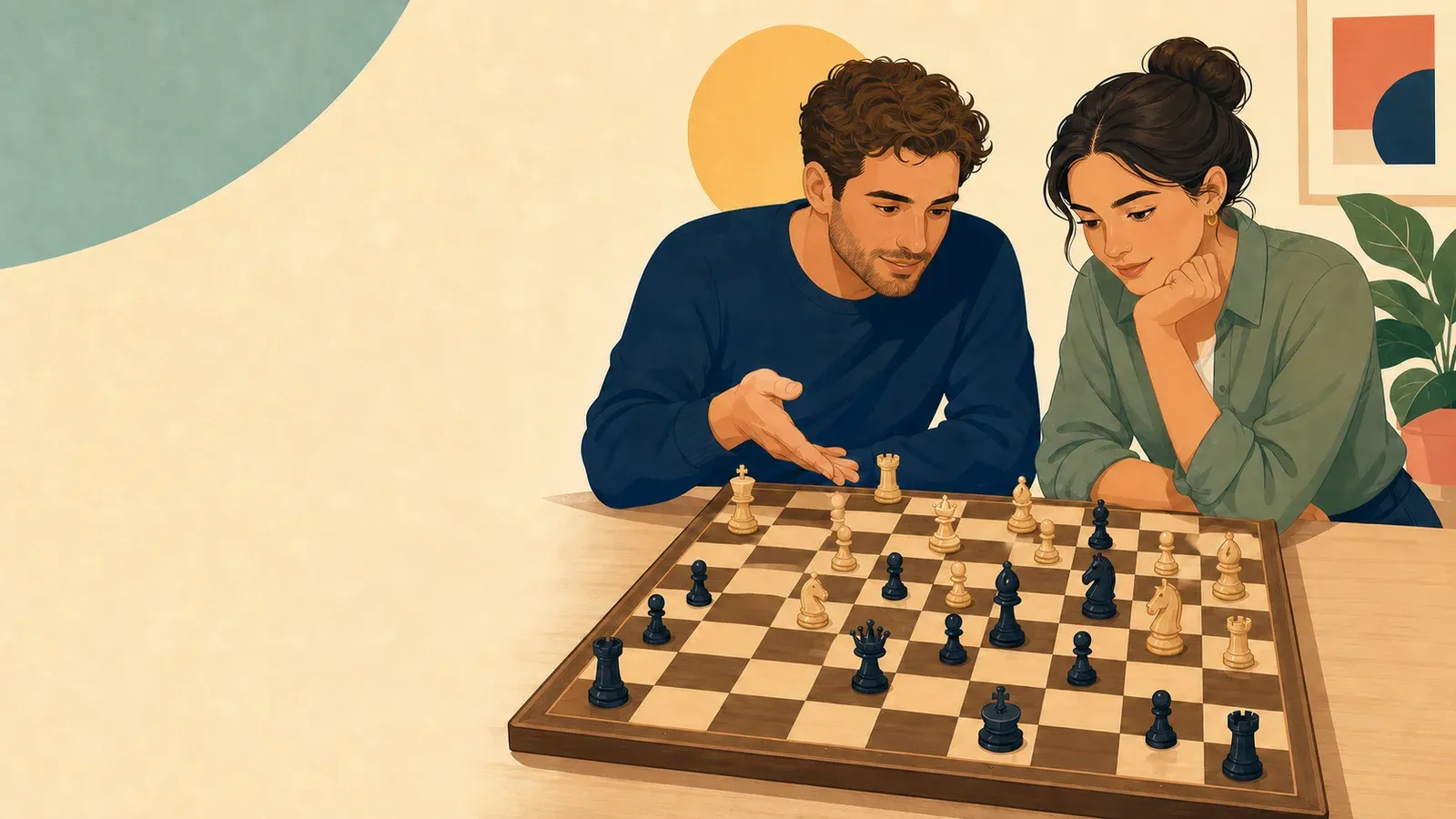
How to start chess with one slow game and a simple review
- Cost to start
- ~$0-25
- Difficulty
- Beginner
- First result
- 60-90 minutes
Borrowed set or free learning board
Legal moves before clever plans
One slow game and one reviewed turn
Set up the board correctly, learn legal movement and check, play one unhurried game without opening memorization, then review a single turning point.
What you need to know
-
Put a light square at each right hand
Orient the 8 by 8 board first, then place rooks, knights, bishops, queens and kings consistently. White makes the first move.
-
Learn how check limits every move
Each piece has its movement pattern, but no move may expose or leave your own king under attack. Kings are checkmated, never captured.
-
Add special moves with their conditions
Castling, promotion and en passant are precise legal moves, not exceptions invented during play. Rehearse each from a small position.
-
Play slowly enough to inspect the board
Before moving, look for checks, captures and threats for both sides. One thoughtful game teaches more than a string of rushed losses.
-
Review your thought before asking an engine
Rebuild one turning point, write what you noticed and compare candidate moves yourself. Use a person or computer only after forming a question.
Orient and set up the board
Place the board so the corner square nearest each player’s right hand is light. There must be eight ranks and eight files, making 64 alternating squares. If the right-hand corner is dark, rotate the empty board before placing anything.
Learn movement and check
Rooks move along ranks or files, bishops on diagonals, and queens in either direction; none can jump. Knights jump in an L shape. Kings move one safe adjacent square. Pawns move forward but capture diagonally. A checked king must move, capture the attacker, or block the attack.
Play one slow game
Reset all 32 pieces and choose colors without attaching meaning to them. Play without a clock, or use a generous limit only if both players need an ending time.
Repeat and find people to play
For the next game, keep the same slow format and carry forward only the review cue. Alternate colors and change partners when convenient. Between games, spend ten minutes on legal-move exercises, simple checkmates or a tactic related to your turning point.

Learn legal play
- FIDE Laws of ChessThe international federation's current over-the-board laws define the board, legal moves, check, special moves, game endings and draws.
- Lichess chess basicsInteractive, no-cost exercises introduce piece movement, captures, check, checkmate and fundamental skills directly on a board.