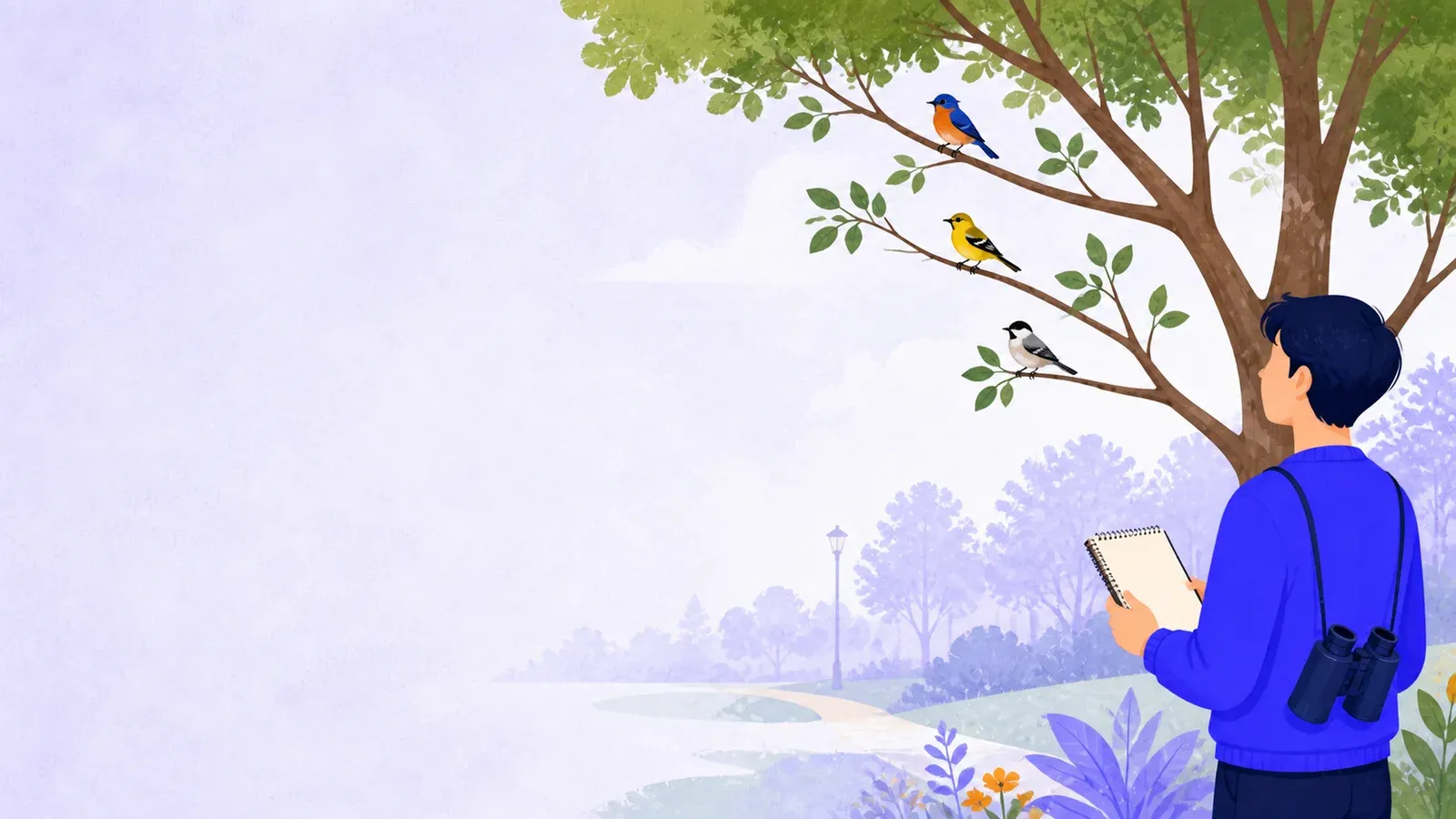
How to start birdwatching with a three-bird field note
- Cost to start
- ~$0-40
- Difficulty
- Beginner
- First result
- 30-45 minutes
Notebook, pencil and optional guide
Careful description matters most
Three useful bird observations
Plan a calm first birdwatching outing, find and describe three birds, use identification clues responsibly, and learn when to leave wildlife alone.
What you need to know
-
Begin somewhere close and familiar
A garden, balcony, street tree or nearby park can provide a complete first outing. Familiar ground lets you pay attention to birds instead of route finding.
-
Observe before trying to identify
Capture size, shape, color pattern, behavior and habitat while the bird is present. Look up a name only after preserving those clues.
-
Use your eyes and ears before tools
Stop, scan and listen before raising binoculars or opening an app. The location of a sound and a bird's movement are easy to lose on a screen.
-
Give every bird room
Stay on permitted routes, avoid nests and roosts, skip call playback and back away whenever a bird becomes alert or changes its behavior.
-
Record uncertainty honestly
A note such as "small brown bird, sparrow-like" is useful evidence. Compare an app suggestion with your notes before confirming the species.
Plan a short outing close to home
Choose a place you already know: a balcony, garden, quiet street, campus, cemetery, waterside path or small park. Look for a safe place to pause without blocking anyone.
Identify a bird with four kinds of clues
When a bird appears, resist reaching for a species list. First decide its broad size and shape. Is it nearer the size of a sparrow, pigeon, crow or goose?
Make a three-bird field note
Divide a page into three entries. Record time, non-sensitive location, habitat, weather, estimated size, silhouette, color pattern, behavior and any sound. Sketch proportions or the bird’s position; it does not need to be art.
Avoid common mistakes and build a repeatable habit
Beginners often scan too quickly, focus only on color or expect every bird to pose. Slow down and describe the first clear view. If the bird disappears, write what you saw immediately instead of replacing it with details from an app image.

Find, identify and protect birds
- Audubon guide to starting birdingA broad beginner primer on finding birds near home, choosing simple tools and connecting with birding groups when you want company.
- Audubon stop, look, listen and repeat methodFour practical steps for scanning perches and open areas, listening carefully and moving through a site without rushing past birds.
- Cornell Lab four keys to bird identificationLearn to combine size and shape, color pattern, behavior and habitat before narrowing an unfamiliar bird to a species.
- American Birding Association ethics codeClear guidance on avoiding stress, nests and habitat disturbance, limiting recordings and respecting rules, property and other people.

Apps for your phone
-
Merlin Bird ID
Compare your field clues with likely local birds, photos and sounds; treat photo or Sound ID results as suggestions that still need checking.
 App Store
 Google Play