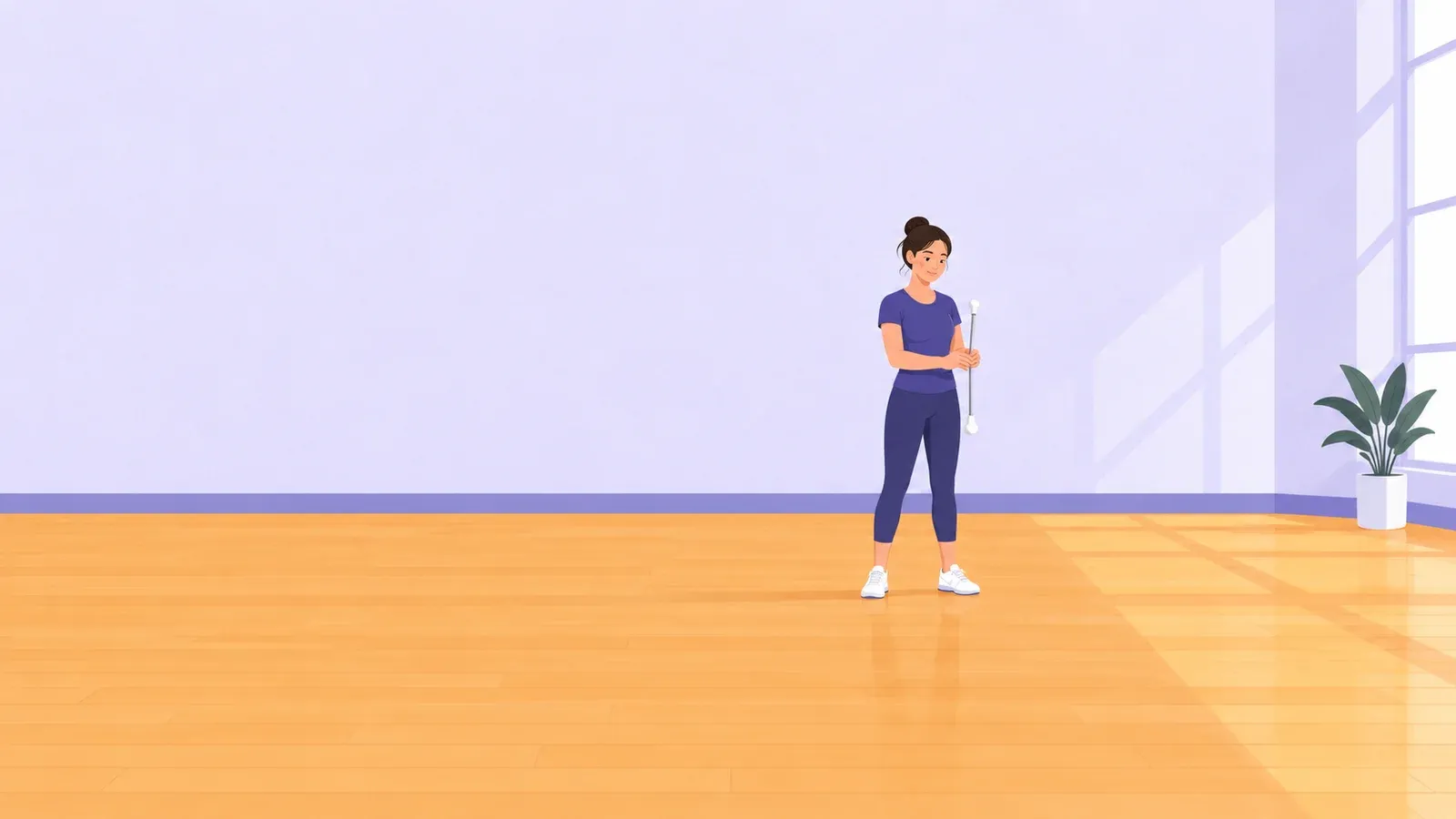
How to start baton twirling with control and confidence
- Cost to start
- Free with a borrowed baton
- Difficulty
- Beginner
- First result
- 20 minutes
Home handling exercise; equipment and classes priced separately
Start slowly; technical twirls benefit from coaching
A controlled transfer sequence at a steady count
Choose a suitable baton, try a simple handling session, and find beginner instruction. Build control and rhythm before learning throws or longer routines.
What you need to know
-
Borrow a suitable baton before buying
Ask a local coach or club about loan equipment and sizing. A twirling baton has a straight shaft and fitted ends; a stick or weighted exercise bar is not a substitute.
-
Keep the first exercise below shoulder height
Practice slow transfers with at least one hand on the baton throughout. Learn releases, catches and technical twirls with a coach.
-
Clear the space before moving
Choose a dry, uncluttered floor with room for your arms and the full baton. Keep other people, pets and breakable objects outside that space.
-
Count slowly and practice both hands
Make a secure transfer, pause, and return the baton. A short sequence you can repeat calmly is a useful first result.
Choose a recreational starting point
This is a good hobby to explore if you enjoy rhythm, coordination and practicing a small movement until it becomes smoother. You can begin without dance experience. Progress involves repetition, and your less familiar hand may initially need more attention.
Prepare the floor and your starting position
Choose a dry, level floor without loose rugs or obstacles. Check the clearance in every direction, allowing for your arm and the baton together. Keep well away from windows, screens, shelves, ceiling fans, other people and pets.
Solve one small problem at a time
If you repeatedly fumble, remove the music and slow the count. Check whether the receiving hand closes before the other opens. If your shoulders rise, pause and reset your posture.
Find instruction and build a weekly habit
In the United States, the USTA resources page links to a club finder organized by ZIP code. Elsewhere, search for your national baton-twirling association, local sports clubs or recreation providers.

Equipment, clubs and the sport
- USTA introduction to baton twirlingExplains recreational, school and competitive routes in the United States, with clubs as a starting point for newcomers.
- USTA club and coach resourcesUse the US club finder organized by ZIP code; some other training materials require professional membership.
- Star Line baton sizing adviceUse this baton maker's arm-measurement method, then confirm the size and model with your instructor before ordering.
- IBTF solo discipline overviewExplains the forms of baton work used in solo competition so you can see what may follow the basics.